Biocides
Preservation and microbial control chemistries supported by SDS Section 2 review and application-specific dosage guidance.
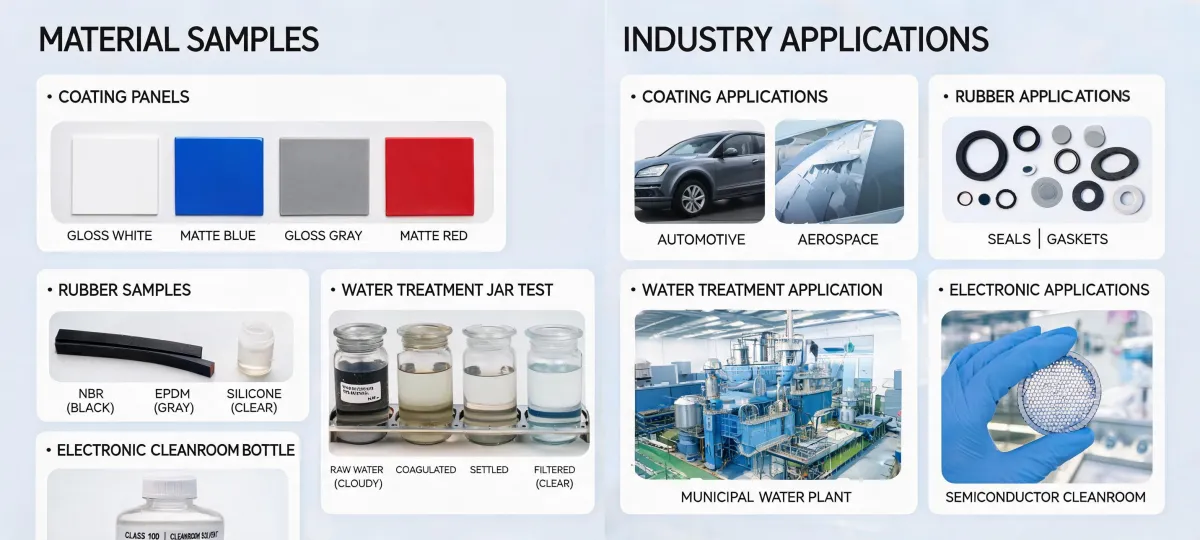
Many chemical portfolios are hard to navigate because buyers think in two different ways. A formulator may begin with a material family such as a biocide, flame retardant, or lubricant additive, while a manufacturing team may begin with a market problem such as durability in rubber, microbial control in water systems, or process stability in coatings. This page keeps both views visible so technical teams can move between chemistry families and application markets without losing SDS, TDS, or compliance context.
Preservation and microbial control chemistries supported by SDS Section 2 review and application-specific dosage guidance.
Performance packages for friction, wear, oxidation, and process stability where test method alignment is critical.
Material solutions that balance fire performance, polymer compatibility, and market-specific documentation expectations.
Processing and performance support for elastomer systems used in mobility, industrial, and infrastructure applications.
Specialty chemistries selected for wetting, dispersion, viscosity control, separation, or stability challenges.
Inhibitor and treatment support aligned to operating water chemistry, material compatibility, and plant procedures.
Guidance around film formation, dispersion behavior, substrate response, and environmental performance requirements.
Controlled chemistry support where documentation, impurity profile, and handling records affect qualification.
The same specialty chemistry can create different value depending on the application. A biocide used in a coating system may be evaluated for dry-film protection, labeling, and compatibility with resin chemistry; in water treatment, the same decision framework may shift toward dosing control, exposure, discharge constraints, and SDS communication. Lanxess structures its technical support around those differences. Instead of treating product pages as static catalog entries, application teams can discuss the operating environment, the desired performance target, and the documentation package required for approval.
That approach is especially useful for global manufacturers running qualified formulas across multiple regions. A procurement team may need one material family, but the EHS, plant, and customer-facing documents can differ by region or end market. By linking material cards, industry views, and the document basket, Lanxess gives technical stakeholders a clearer route from initial search to controlled file review.
Send the application context and let the right technical desk assemble the recommended route.