Safety Data Sheet
Latest SDS routing with GHS classification, hazard communication, handling, and emergency details by region.
Technical buyers rarely need a single PDF in isolation. They need a controlled set of safety, performance, and compliance files that can be reviewed by procurement, EHS, logistics, and formulation teams at the same time. The Lanxess Document Basket organizes this work around the way chemical decisions are actually made: by product family, jurisdiction, language, application market, and revision status.
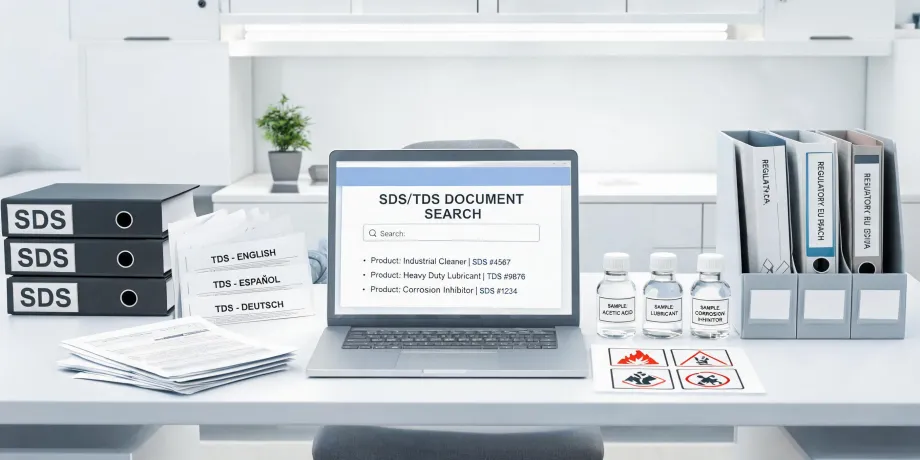
Lanxess treats document delivery as a controlled technical service rather than a static download shelf. Each request can identify the target market, intended application, and preferred file language, then route the basket to the relevant product stewardship or application group. That workflow reduces the chance that a team reviews an outdated SDS, a regionally incomplete declaration, or a TDS that does not match the intended use conditions.
For regulated markets, the service can separate safety communication from performance guidance. EHS teams can receive SDS and GHS transport information, while formulation engineers receive viscosity, active content, compatibility, dosage, storage, and processing notes. Procurement can keep a clean trail of revision dates and requested document types, which is especially useful when a product is sourced for multiple manufacturing sites.
Latest SDS routing with GHS classification, hazard communication, handling, and emergency details by region.
Performance ranges, recommended dosage windows, storage guidance, and method references for technical screening.
REACH, TSCA, food contact, or market-specific declaration packages routed to stewardship review.
Use-case guidance for coatings, elastomers, water systems, lubricant additives, or industrial treatment conditions.
A document basket becomes more useful when it includes the intended process window. Lanxess asks for application context so the response can include the right file set, the right document language, and any early warning around compatibility, storage, shipment, or product stewardship. For example, a coatings formulator may need active content, solvent compatibility, and drawdown behavior, while a water treatment team may need dosing ranges, material compatibility, and SDS Section 2 review before a plant trial.
Submit the basket once, keep revision context intact, and give every technical stakeholder the same starting point.